Latest Post

ISIS terrorists discovered in Morocco

MOROCCAN anti-terror services working in collaboration with Spanish police officers have broken up a jihadist terror cell in Morocco. In total nine members of the cell, reported to be linked to the Islamic State of Iraq and Syria (ISIS), were detained on Thursday in the three Moroccan cities of Fes, Tetouan and Fnideq. The terrorists were working to recruit new members to the cell with the objective of sending them off to fight in the conflicts currently underway in Syria and Iraq.

It is believed that some of the group made frequent visits to the Spanish city of Ceuta, located on the north coast of Morocco, with the intention of converting people to their cause and raising financial aid. The Spanish Interior Minister has linked those arrested with ISIS, and confirmed that they had received training in the use of weapons and the manufacture of explosives with the goal of participating in suicide attacks or travelling to conflict zones in the Middle-East.

It has also come to light that there were plans to carry out a terror attack on Moroccan soil. Computers and other data-storage devices used by the jihadists are currently being examined for evidence of concrete plans. The investigation remains open within the three cities, with police from both nationalities continuing to work together. Government sources commented that the operation reflects on the excellent relationship that exists between Spain and Morocco when combating terror in the region.


Luggage thieves caught at airport

THE Guardia Civil have arrested two people under suspicion of stealing suitcases from distracted airport passengers. Within the Guardia Civil brief of the Safer Tourism Plan which has been put in place to prevent theft from tourists visiting Malaga, the officers at the airport have caught two people who were taking national flights with only hand baggage and then taking advantage of distracted tourists arriving at the baggage carousels to steal their luggage while they were looking away. On several occasions they also, allegedly, pick-pocketed passengers as well as taking their hand baggage while they were retrieving their check in luggage. Investigating officers calculate that they have stolen around €21,000 worth of luggage and wallets.


Ebola outbreak vastly underestimated

The death toll from the world's worst outbreak of Ebola stood on Wednesday at 1,069 from 1,975 confirmed, probable and suspected cases, the agency said. The majority were in Guinea, Sierra Leone and Liberia, while four people have died in Nigeria. The agency's apparent acknowledgement the situation is worse than previously thought could spur governments and aid organisations to take stronger measures against the virus. "Staff at the outbreak sites see evidence that the numbers of reported cases and deaths vastly underestimate the magnitude of the outbreak," the organisation said. "WHO is coordinating a massive scaling up of the international response, marshalling support from individual countries, disease control agencies, agencies within the United Nations system, and others." International agencies are looking into emergency food drops and truck convoys to reach hungry people in Liberia and Sierra Leone cordoned off from the outside world to halt the spread of the virus, a top World Bank official said. In the latest sign of action by West African governments, Guinea has declared a public health emergency and is sending health workers to all affected border points, an official said. An estimated 377 people have died in Guinea since the outbreak began in March in remote parts of a border region near Sierra Leone and Liberia. Guinea says its outbreak is under control with the numbers of new cases falling, but the measures are needed to prevent new infections from neighbouring countries.

"Trucks full of health materials and carrying health personnel are going to all the border points with Liberia and Sierra Leone," Aboubacar Sidiki Diakit president of Guinea's Ebola commission, said late on Wednesday. As many as 3,000 people are waiting at 17 border points for a green light to enter the country, he said. "Any people who are sick will be immediately isolated. People will be followed up on. We can't take the risk of letting everyone through without checks."


Arrested for allegedly throwing two suitcases of cocaine out of a hotel window

Poice have established that a 39-year-old Irish man who was arrested in Spain after allegedly throwing two suitcases of cocaine out of a hotel window is a criminal who was previously targeted here in a proceeds-of-crime case. The suspect, who remains in custody in Valencia, has been named as Philip Grendon from Greenfort Drive, Clondalkin, and also with an address at Spiddal Road, Ballyfermot. Grendon's brother, Brian, is a member of a major west Dublin drugs gang who have been constant targets of gardai for 15 years. Already this year, officers based in Ballyfermot have been involved in the seizure of more than €1m worth of drugs from this crew who are considered one of the most organised and longest-established in the country.

The bizarre incident for which Grendon was arrested in Valencia happened last Friday just before 10pm at the four-star Tryp Valencia Oceanic Hotel. Police are said to be working on the theory that the alleged drugs trafficker, who had checked into the hotel a few hours earlier, confused noise from other guests entering and leaving their rooms with a rival gang trying to steal his drugs after suffering a paranoia attack. It is alleged that Grendon also removed ceiling tiles in his room, along with an air vent in an apparent attempt to hide the stash.

The 55kg of cocaine in the cases would have an estimated street value of more than €3.8m in Ireland. Sources who know Grendon say they are "surprised" that he would be trusted by a gang to be in charge of such a huge drugs haul. "Philip was always known to be a paranoid individual, but if what the Spanish police are saying is true, this is taking paranoia to a whole new level," a senior source said. Grendon's younger brother is convicted heroin dealer Brian Grendon (37), who was jailed for six years in December 2002 after he was busted with almost €2m worth of heroin in Palmerstown, west Dublin, the year before. shootings Brian Grendon was previously described in court by a senior detective as being linked to a gang who had in the past "used fatal shootings of anyone who compromised their business".

Philip Grendon appeared in court in Dublin in February 2012 when gardai prosecuted him under proceeds of crime legislation. Some of his associates were targeted by gardai as part of Operation Jumbo in 2002. They included murder victim David McCreevy (23), who was shot dead in Tallaght in 2002.


Spain to probe cigarette smuggling Crime.


EU's anti-fraud office on Monday urged Gibraltar and Spain to launch legal action after it found signs that organised crime was behind a rise in cigarette smuggling in southern Spain, AFP reports. The European Anti-Fraud Office (OLAF) made the recommendation after completing a probe it launched in August 2013 at the request of Madrid into a sharp rise in cigarette smuggling across the border between Gibraltar and Spain between 2009 and 2013. "The OLAF investigation has raised a number of concerns regarding the link between a significant increase in the size of the Gibraltar market for cigarettes over the past four years and the subsequent increase of cigarette smuggling across the frontier," a spokesman for the anti-fraud office said. "The concerns include indications of the involvement of organised crime," it added. "The OLAF final case report, and recommendations to initiate judicial proceedings related to the findings of the report, have been sent to the Spanish General State Prosecutor and to the Gibraltar Attorney General." Widespread cigarette smuggling between the tiny, low-tax British territory of Gibraltar to Spain is a major irritant in their frayed diplomatic relations. Smugglers buy the cigarettes in large volumes in Gibraltar at a price much lower than is charged in Spain, where the government in 2012 increased the sales tax to help plug a gaping public deficit. Spain in August introduced stringent border checks at its border with Gibraltar, leading to lengthy queues for motorists, in what it said was a move aimed at clamping down on cigarette smuggling.
But Gibraltar argues the stepped-up border controls are in retaliation for the installation of an artificial reef in its waters that has prevented Spanish boats from fishing there. Gibraltar Chief Minister Fabian Picardo welcomed the anti-fraud office report and said the territory wanted to work together with Spain to investigate the cigarette smuggling. "We wish any necessary investigations in this and in all areas to be carried out jointly between the competent Spanish and Gibraltar authorities in a genuine spirit of cooperation," he said. The government of Gibraltar said cigarette smuggling was already being brought under control thanks to the "draconian" measures it introduced in January. These include the introduction of searches of vehicles crossing into Spain and giving customs and police officers greater powers to fight smuggling. The Spanish government meanwhile said the anti-fraud office's report "justified" its "work in the fight against fraud and the underground economy". Spain ceded Gibraltar to Britain in 1713 but has long argued that it should be returned to Spanish sovereignty. London says it will not do so against the wishes of Gibraltarians, who are staunchly pro-British.
 

First Spaniard dies of Ebola

confirmed by the Madrid's health department that a 75-year-old Spanish priest, Miguel Pajares has died in Madrid’s Carlos III hospital from Ebola. The Spanish priest who was recently repatriated from Liberia, Africa last Thursday had been in isolation in Saint John of God hospital in the capital of Monrovia. It is known that he contracted the Ebola virus from the Director of the Hospital after a visit. The director is also known to have died. Miguel Pajares was being treated with an experimental drug ZMapp which is designed to fight the deadly virus, but failed to respond to the medication.

The drug ZMapp is a treatment that is made by a private US company and is still in intensely early stages and had previously been only tested on monkeys. In a statement the health ministry said that the drug arrived to the hospital late on Saturday evening to treat the 75-year-old. The drug ZMapp though in very early stages, was only allowed by the Spanish drug safety agency under “exceptional importation” to be used in the use of a non-authorised medication because of an incident where a patient’s life is in danger.


Expats could be forced to return home under new government tax proposals affecting rental property in the UK.

  The plans, forwarded by the Chancellor George Osborne, would see the removal of personal tax allowance privileges for overseas residents who also claim income in the UK. If the Chancellor goes ahead with the plans, couples drawing a government pension could also face a £4,000 (€5.000) cut in their yearly income, forcing many to return home. UK government pension plans are only taxable in Britain, meaning that former civil servants living abroad could see a rise in their tax obligations.

Under the current system, expatriates and EU nationals have UK-earned income offset with a personal tax allowance of £10,000 (€12.570), but the planned reforms could jeopardise those expats who live under a carefully considered budget. Up to 400,000 expats could be affected by the proposals which would inject the treasury with an extra £400 million (€503 million) a year.


Threat of EBOLA as 224 african immigrants rescued off Spanish coast

Maritime rescue vessels picked up a total of 224 people from 23 dinghies in the Strait of Gibraltar on Monday morning.  Both men and women, believed to all be Sub-Saharan Africans, are reported to be in a good state of health. They are currently being moved to Tarifa where they will be attended to by Red Cross volunteers.


Spain: INTERPOL Targets Trafficking Of Stolen Vehicles

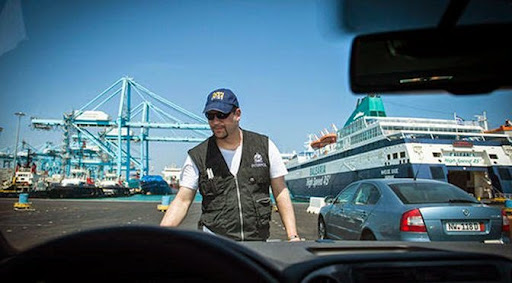
In an INTERPOL-supported operation in Spain targeting the trafficking of stolen vehicles, nearly 20 vehicles were recovered and some 15 individuals arrested. Led by the Spanish National Police, Operation Paso del Estrecho (which means ‘crossing the straits’), was conducted from 28 July to 1 August at the port of Algeciras in southern Spain, a known route used by organised criminal networks to smuggle cars stolen from throughout Europe into North Africa.

With the assistance of INTERPOL’s Stolen Motor Vehicles (SMV) unit, police monitored car ferries leaving the port en route to Morocco, with some 5,000 vehicles screened against INTERPOL’s SMV database. INTERPOL coordinated the deployment of 28 experts from seven countries to support the operation. The experts are members of the INTERPOL Stolen Motor Vehicles (SMV) Task Force, comprising police and private investigators who support member countries with operations targeting the theft and trafficking of motor vehicles. The INTERPOL SMV database contains more than 7 million records submitted by 128 member countries. In 2013, countries searched the database more than 125 million times, resulting in 117,000 positive hits. “Operation Paso del Estrecho was very important because it allowed us not only to detect and recover stolen vehicles from Spain and other European countries, but also to obtain crucial information that will allow us to continue our investigations into the organized crime groups dedicated to illegal vehicle trafficking,” said Ángel Arroyo Morales, Head of the vehicle crime investigation unit of the Spanish National Police Central Squad of Organized Crime. “There is no doubt that with strong cooperation between INTERPOL and police across Europe and beyond, we will continue to recover even more stolen vehicles before they can be used for criminal purposes,” he concluded. In addition, 15 people were arrested during the operation, including one Ukrainian and two Spanish nationals arrested in connection with a major investigation of the Central Squad of Organized Crime of the Spanish National Police.

They are suspected of being the masterminds behind a vast trafficking ring transporting stolen luxury cars between Spain and Ukraine, via Poland and Moldova. The stolen vehicles seized came from various European countries including Belgium, France, Germany, Italy, the Netherlands and Sweden, demonstrating the transnational character of this crime. “The trafficking of stolen vehicles is a crime that knows no borders. The only way to effectively combat the organized criminal networks behind this crime is therefore through coordinated joint actions, as evidenced by this successful operation,” said INTERPOL’s Director of Specialized Crime and Analysis, Glyn Lewis. Operation Paso del Estrecho is an annual initiative conducted by Spanish police in Algeciras – a major gateway between Europe and Africa which sees approximately 4.8 million people and 1.3 million vehicles pass through each year – to prevent stolen vehicles from leaving the country and to identify and disrupt the criminal groups responsible for the illicit trafficking. Highlighting the links between organized crime and the trafficking of stolen motor vehicles – which are often used in the commission of other serious crimes – is a key part of INTERPOL’s global Turn Back Crime campaign. The campaign aims to raise awareness of these hidden links, and of the very real effect these crimes can have on people’s daily lives.


Major crime gang link as Matthew Macklin’s coach survives assassination attempt

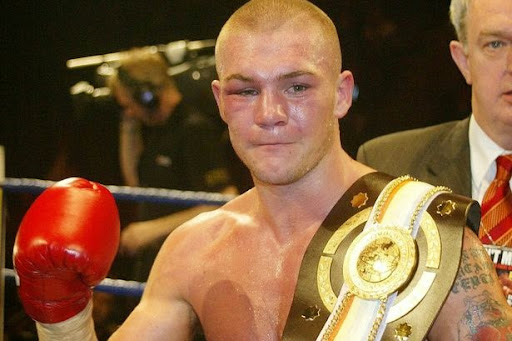
Former European boxing champion Jamie Moore is under armed police guard in a Spanish hospital after he was shot in the legs in Marbella at the weekend. 

Moore is currently based in Spain with his wife and two children where he is training Irish boxer Matthew Macklin at the MGM gym in Puerto Banus ahead of his upcoming fight in the National Stadium on August 30. Moore was shot in both legs and the foot when the gunman targeted him after he left a party on Saturday night but his injuries are not believed to be life-threatening. “Just to let everyone know Jamie Moore is still in hospital but he should be ok,” Macklin tweeted last night. “He was shot in his legs but the doctors have said there shouldn’t be any serious or permanent damage done.”

The coach and well-respected Sky Sports pundit who has no involvement in crime agreed to become Macklin’s coach last year, but gardai sources have indicated that “special surveillance plans” are in place for the upcoming fight. The villa where Moore was shot is owned by boxing manager Daniel Kinahan, a key member of the Christy Kinahan crime syndicate which operates a sizeable crime operation on Spain’s infamous Costa del Crime. Nicknamed the ‘Tipperary Tornado’, Birmingham-born Macklin has no involvement in crime but has been photographed in the company of major gangsters Gary Hutch and Daniekl Kinahan at major events.


Former British and European champion boxer Jamie Moore has been shot in Marbella

Former British and European champion boxer Jamie Moore has been shot in Marbella - apparently in both legs.

Moore, the former European light-middleweight champion, was in Spain working at a gym owned by boxer, Matthew Macklin, who he is training.

It is understood the 35-year-old Moore, from Walkden, Greater Manchester, has now left hospital after treatment.

Moore, highly regarded in the sport, was on the verge of a WBC title shot, in 2009, but decided to quit the sport in 2010 on medical grounds.

Moore is a former two-time British light-middleweight champion and Commonwealth champion.

A source told the Manchester Evening News: "It would appear he was out and about, not at the gym, when he was shot."

A spokesman for the Foreign Office confirmed that a British national had been shot over the weekend.

Moore was helping prepare Mackin for a fight in Dublin later this month against Argentinian, Jorge Sebastian-Heiland for the WBC international midldeweight title.

As well as a working as a trainer Moore has worked as a TV commentator.

He is a friend of former boxer, Ricky 'The Hitman' Hatton, who told the Manchester Evening News 'battler' Moore would bounce back from the attack.

He said: "I'm devastated by this news. Jamie is a great pal of mine and my thoughts are, of course, today with him and his family.

"He's a great battler and if anyone's going to pull through in hospital it'll be him."

Moore has spoken at several charity events and fundraising dinners for boxers' whose carrers have been cut short by injury.

Moore won a legendary fight with Macklin in 2006 at the George Carnell Leisure Centre in Davyhulme in what was dubbed the 'fight of the year'.

He won 32 of 37 bouts with 23 being knockouts.

Moore boxed an an amateur before turning professional in 1999.

One of Moore's most memorable moments came last year in a three-round knockout victory over Michele Piccirillo for the European belt.

He will also be remembered for his domestic fights with Matthew Macklin, Michael Jones and Ryan Rhodes.

Local Spanish police are investigating the shooting and are likely to alert Britain's National Crime Agency.

So far there have been no arrests.


High Alert in Casablanca Airport After Death of Woman Returning from Mecca

Morocco’s Mohammed V international airport is under high medical alert since a 76-year old woman died immediately upon her return from Mecca. Within the first hours after her death, Moroccan authorities feared the death was caused by the Ebola virus. But a statement from the Ministry of Health said the woman suffered from an acute “pulmonary edema.” It is unclear, however, whether this statement will dispel people’s fears regarding the safety of the 30,000 Moroccans who will go to perform pilgrimage next September. Last June, following the emergence of Ebola or Mers (Middle East Respiratory Syndrome) virus in Saudi Arabia, Morocco recommended its pilgrims to cancel their planned trips to Mecca this year. The Moroccan Ministry of health advised Moroccans who decide to go ahead with their pilgrimage to put on masks, which are offered for free by Moroccan authorities.


Ebola terror at Gatwick as passenger collapses and dies getting off Sierra Leone flight

Airport staff tonight told of their fears of an Ebola outbreak after a passenger from Sierra Leone collapsed and died as she got off a plane at Gatwick. Workers said they were terrified the virus could spread globally through the busy international hub from the West African country which is in the grip of the deadly epidemic. The woman, said to be 72, became ill on the gangway after she left a Gambia Bird jet with 128 passengers on board. She died in hospital on Saturday. Ebola has killed 256 people in Sierra Leone. A total of 826 have died in West Africa since the outbreak began in February. Tests were carried out to see if the woman had the disease. The plane was quarantined as ­officials desperately tried to trace everyone who had been in contact with the woman. Airport workers faced an anxious wait to see if the woman had Ebola. One said: “Everyone’s just ­petrified. “We’ve all seen how many people have died from Ebola, especially in Sierra Leone, and it’s terrifying.”


Dead beggar ignored for hours at airport

Thousands of passengers departing from Majorca's busy Son Sant Joan airport failed to notice the dead body of a German beggar for at least six hours on Thursday morning. The body of 61-year-old René Becker lay unnoticed on a bench outside the departure lounge of the airport for several hours, local daily Diario de Mallorca reported on Friday. The man known locally as 'El Barbas' ('Mr Beard') had been living outside the airport for seven years, surrounded by his few possessions. Early on Thursday morning, however, airport staff noticed that he seemed to be sleeping more deeply than usual. When they approached, they found he didn't have a pulse and that his body was already cold. A coroner later determined he had been dead for at least six hours.  In that time, thousands of passengers bound for destinations as diverse as Italy's Palermo and the northern English city of Doncaster has traipsed past his body. Becker, a former engineer who left Germany after divorcing his wife, was a minor celebrity on Majorca. Described as "friendly" and "affable", he had even made several appearances in Germany's tabloid press, according to local German-language daily Mallorca Zeitung. One article shone the spotlight on his brief reunion with his daughter Patricia.


Spanish police crackdown on organised crime

The Guardia Civil and National Police dismantled 497 criminal organisations in 2013 and detained 6,292 people for drug and human trafficking, said Security Secretary Francisco Martinez last Thursday talking to the media. Police operations to crackdown on organised crime in Spain had a 97 per cent success rate, he added. As much as 83 per cent of all groups dismantled had been operating for less than three years, while seven out of every 10 criminal organisations were made up of nationals from more than two different countries. Most criminal organisations were based in Barcelona and Madrid, followed by Cadiz, Malaga, Alicante, Valencia, Sevilla and Murcia. The large majority of them traffic in cocaine (31 per cent) and 21 per cent traffics in hashish, said Martinez. Following the nationwide operations launched last year to crackdown on organised crime, Spanish police seized almost 20 tons of cocaine, 146,708 kilograms of hashish, 103 kilograms of heroin, more than 10,000 ecstasy pills, 2,102 cars, 119 boats, six aircraft, 558 guns, 630 knives, 909 computers, 4,498 mobile phones and €30 million. Data show arrests for human trafficking also increased last year, with as many as 753 people detained or 33 per cent more than in 2012, said Martinez. A total of 1,180 victims - most of them Romanian, Chinese and Spanish nationals - were freed from the clutches of these criminal organisations, he added.


Ebola virus a threat

"The risk to UK travellers and people working in [affected countries] of contracting Ebola is very low but we have alerted UK medical practitioners about the situation in West Africa and requested they remain vigilant for unexplained illness in those who have visited the affected area. "It is important to stress that no cases of imported Ebola have ever been reported in the UK and the risk of a traveller going to West Africa and contracting Ebola remains very low since Ebola is transmitted by direct contact with the blood or bodily fluids of an infected person." BBC global health correspondent Tulip Mazumdar said the West African outbreak had been going on for four months. In that time local people had been looking after the sick and carrying out burials, which could actually help to spread the virus, she added. Ebola kills up to 90% of those infected, but patients have a better chance of survival if they receive early treatment. The outbreak - the world's deadliest to date - was first reported in Guinea in February. It then spread to Liberia and Sierra Leone. Ebola virus disease (EVD) Symptoms include high fever, bleeding and central nervous system damage Fatality rate can reach 90% Incubation period is two to 21 days There is no vaccine or cure Supportive care such as rehydrating patients who have diarrhoea and vomiting can help recovery Fruit bats are considered to be virus' natural host


Lionel Messi may have just been named the most valuable player at the World Cup in Brazil but that is unlikely to soften the blow of having to pay Spain's largest tax bill

Lionel Messi may have just been named the most valuable player at the World Cup in Brazil but that is unlikely to soften the blow of having to pay Spain's largest tax bill — a whopping €53 million ($71 million)On top of that €53 million, the FC Barcelona star could also have to pay an extra €3 million on undeclared advertising and sponsorship earnings for the years 2007 to 2009.

 The huge sum paid by Lionel Messi this year covers taxes on his salary, as well as on his assets and advertising deals. It also includes €22.4 million in outstanding tax for 2010, 2011 and 2012. 

 Over the past seven years, the Argentina captain has paid more than €100 million to Spain's tax office, Spanish newspaper La Vanguardia reported. 

 This amount has increased proportionally to the player’s income.  

 According to the business magazine Forbes, Lionel Messi earns more than €48 million a year from salary and sponsorship, making him the fourth highest-earning athlete in the world. 

 He’s also the highest-paid football player with a €20 million annual salary, ahead of Real Madrid’s player Cristiano Ronaldo.

 Last year, Lionel Messi and his father were accused of defrauding the Spanish tax office of over €5 million ($7 million) but cleared the tax debt before a court appearance.‏


Wildfires ravage Spain villages

 100 firefighters backed by planes and helicopters battled a blaze in scrubland near the town of Bustares in the central province of Guadalajara, east of Madrid, the regional government said. The blaze, which was accidentally started by a beekeeper, forced the evacuation of 140 people from two villages, it added. The wildfire has destroyed around 200 hectares of land, including part of the Sierra Norte national park. More firefighters aided by water-dropping aircraft fought another blaze raging near the town of Cogolludo, also in Guadalajara province. This fire, accidentally sparked on Wednesday by a combine harvester, saw 40 people evacuated from two villages. The blaze has so far destroyed over 800 hectares of scrubland and pine forest. High temperatures, strong winds and low humidity levels were fuelling the two wildfires, officials said.


Bolivia nationalized the company that runs the three largest airports in Bolivia because the government claims the company did not invest in improving the airports.

Servicios de Aeropuertos Bollivianos SA (Sabsa) is a division of Spain's Abertis Infraestructure SA but Sabsa is also partly owned by Aena Aeropuertos SA based in Madrid. Bolivian president Evo Morales said that the privatization of Sabsa in 1997 was equivalent to "robbery" and "looting". He claimed that since that time the company's profits have been exorbitant and investments "ridiculous".


real estate company Reyal Urbis filed for insolvency after failing to renegotiate debt with its creditors.

Spain's property market crash claimed another victim on Tuesday, as real estate company Reyal Urbis filed for insolvency after failing to renegotiate debt with its creditors.


The move takes the property developer, which had 3.6 billion euros ($4.8 billion) of debt at the end of September, closer to becoming Spain's second-largest bankruptcy after Martinsa Fadesa, which defaulted on 7 billion euros of debt in 2008.

Dozens of property companies have collapsed in Spain, where house prices have fallen around 40 percent since their 2007 peak. With the country locked in a deep recession, analysts expect prices to fall further still.

Spain's banks were crippled by the property market bust, eventually requiring the state to agree a European bailout for its lenders of almost 40 billion euros last year. Indebted property firms have asked banks for debt relief but patience is wearing thin among lenders saddled with soured property assets.


Reyal Urbis is 70 percent owned by construction magnate Rafael Santamaria and its creditors include Santander, BBVA, Bankia and Banco Popular.

The company, which valued its property portfolio at 4.2 billion euros in June 2012, said it would continue to operate as permitted by Spanish insolvency laws.

Its insolvency petition now goes to court and its fate will be in the hands of a judge.

Reyal Urbis said Santamaria would remain at the helm of the company and he still hoped Reyal Urbis could reach a deal with its creditors, given "the good will of all negotiating parties".

The company had until Feb. 23 to reach a debt restructuring deal with the banks or file for insolvency. Sources close to the matter told Reuters on Friday that creditors had rejected the company's 3.6-billion-euro proposal.

Trading in the company's shares was suspended on Tuesday, Spain's stock market regulator said. The stock had plunged 99 percent since June 2007 to close at 0.124 euros on Monday.

At the end of 2011, Reyal Urbis owned some 888 finished homes in a country where over a million homes lie empty. The company also had 8 million square metres of land for development and 237,000 square metres of commercial property, including offices, shopping centres, industrial property and hotels.


Support : Creating Website | Johny Template | Mas Template
Copyright © 2011. MARBELLA ART - All Rights Reserved
Template Created by Creating Website Published by Mas Template
Proudly powered by Blogger